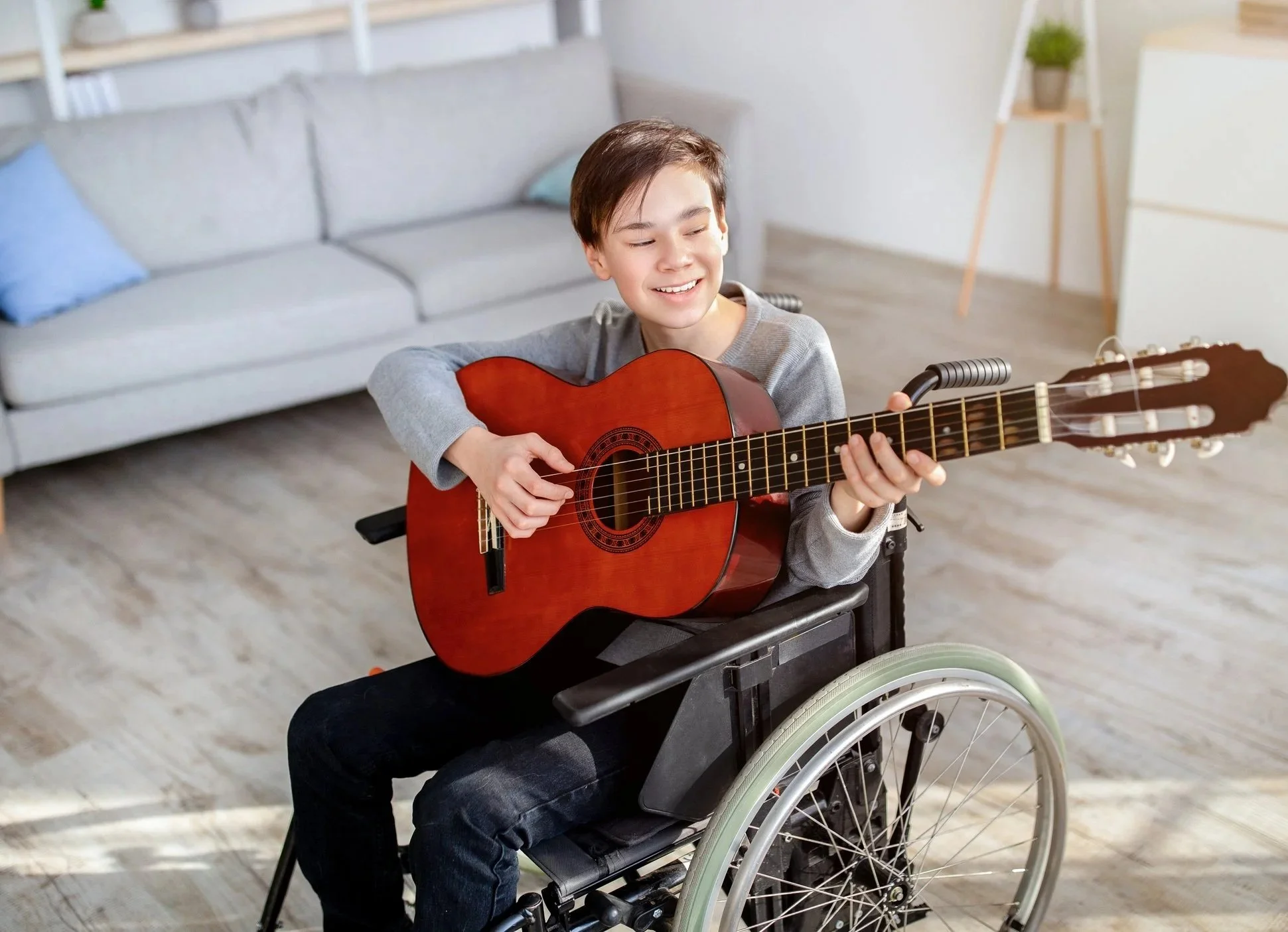
adaptive music
A flexible space to make music and create.
Adaptive music sessions honor your communication style, sensory needs, physical access, and creative preferences.

find your tempo
Whether you want to focus on composition, songwriting, instrumental study, or jamming, each one-on-one session is guided by your interests using keyboard, guitar, or electronic music as creative tools.
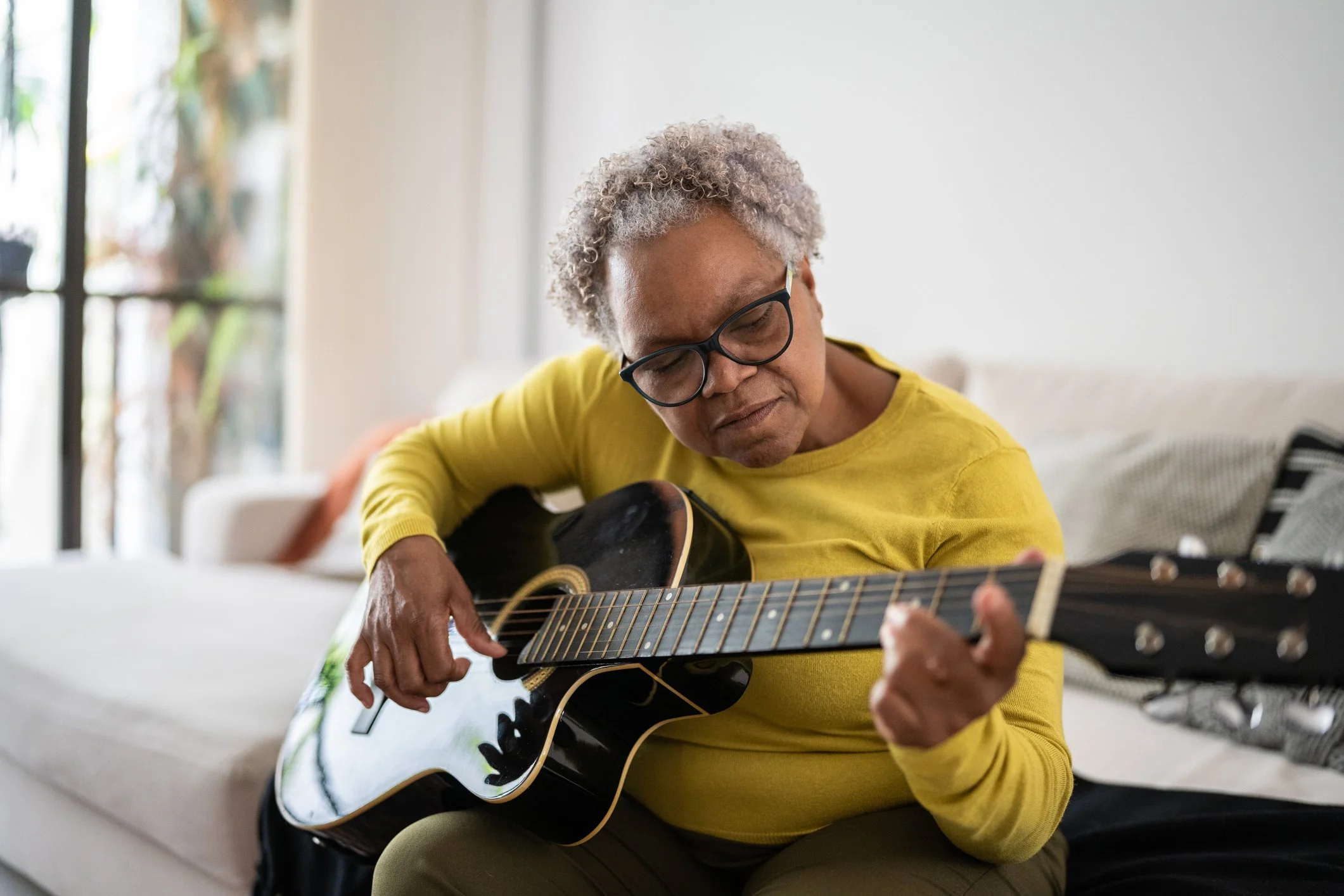
for every age and level
Adaptive music sessions are well suited for anyone who may enjoy creating and engaging with music.
Sessions can support a wide range of physical and sensory needs, communication styles, memory changes, and experience levels.
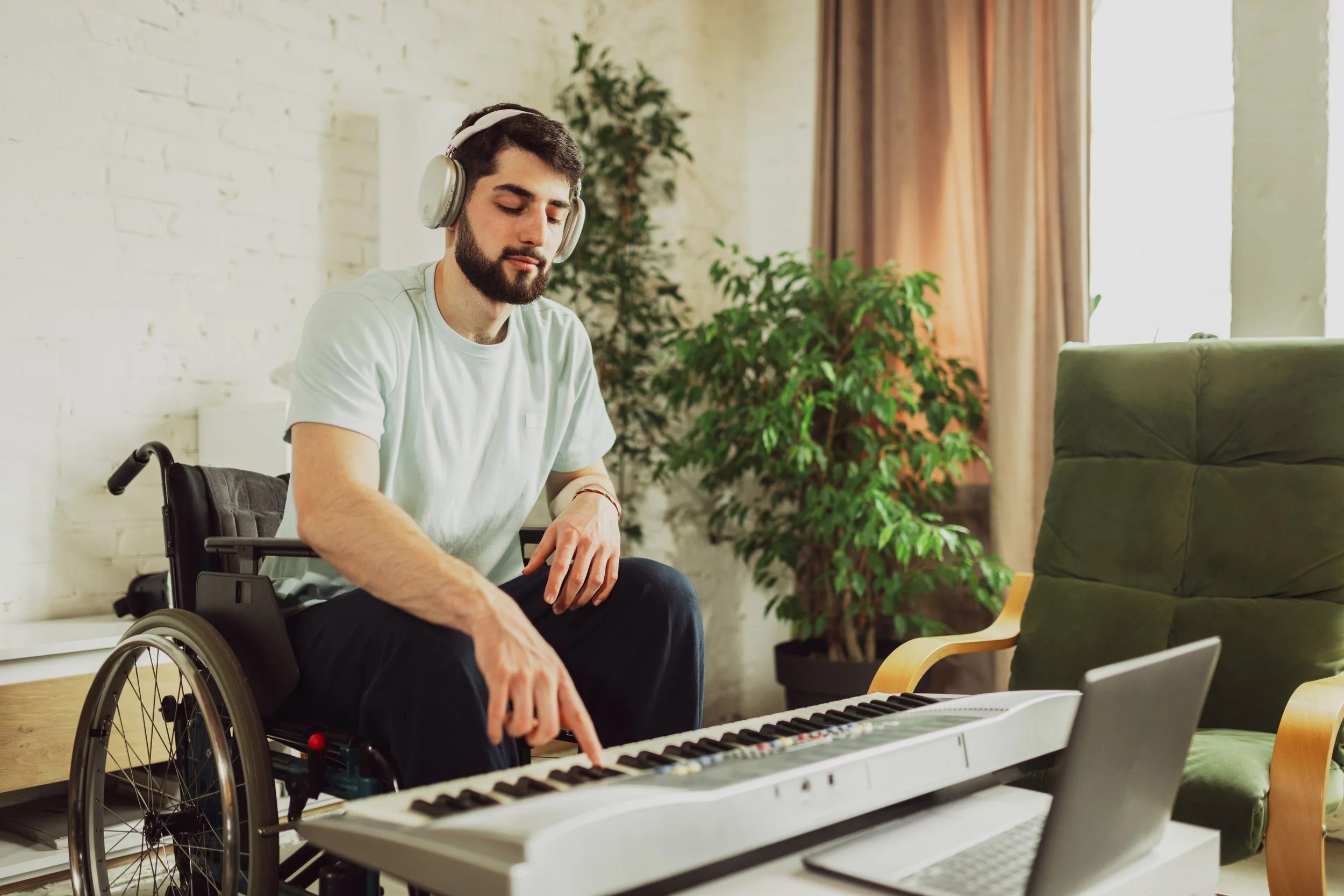
Following your lead
Adaptive music can support emotional regulation, self-expression, connection, confidence and autonomy, and sensory engagement - all within a flexible, one-on-one setting.
“Graham doesn’t just teach music - he builds a genuine connection that meets our son exactly where he is. Through that bond, he has given him the confidence and space to be just like any other kid, exploring his love for music. Graham is an indispensable part of our son’s life.”
- Emily, parentFrequently Asked Questions
For more answers, visit our full FAQ page →-
Adaptive music is a flexible, person-centered way of making music that follows the student’s interest and abilities. Sessions are shaped around your physical abilities, sensory preferences, communication style, and creative interests - not around a fixed method or outcome. The goal is for music-making feel accessible, expressive, and genuinely enjoyable.
-
Adaptive music is for anyone who wants to explore music in a way that feels supportive and respectful of how they move, communicate, process, or engage. This includes (but is not limited to) people with physical disabilities, sensory differences, communication differences, cognitive changes, or anyone who benefits from a more flexible, attuned creative environment.
No prior musical experience is needed.
-
Each session is guided by your interests and comfort level. That might include:
Exploring different sounds, rhythms, and instruments
Playing familiar songs or creating new ones
Improvising, composing, or experimenting
Using technology, adaptations, or supports as helpful
Sessions can be energetic, calm, structured, open-ended (or a mix of everything!) depending on what works best for you.
-
Not at all. Adaptive music is about access and expression, not technical skill. Instruments are introduced in ways that feel approachable, and there’s no pressure to “perform” or get things right.
-
That’s absolutely welcome. Sessions are designed to support many forms of communication, including AAC, gestures, writing, vocalizations, or shared exploration. Communication is viewed as something to be supported - not a prerequisite.
-
Yes. Sensory comfort is a core part of adaptive music. Volume, pacing, lighting, instrument choice, and session structure can all be adjusted to support regulation and ease.
-
Adaptive music sessions are creative, supportive, and intentional - but they are not traditional music lessons and not medical therapy. The focus is on engagement, connection, exploration, and expression rather than mastery or performance.
-
Many people find that adaptive music supports regulation, confidence, and self-expression in a natural way. While these sessions are process, not goal, oriented, music often provides a powerful space for agency, choice, and connection.
-
Yes - when appropriate and desired. Some people enjoy shared sessions with a family member, partner, or caregiver, while others prefer individual time. We’ll talk together about what feels best.
-
Sessions are shaped through ongoing conversation, observation, and attunement. Preferences, energy levels, access needs, and goals can evolve over time - and sessions evolve alongside them.
-
That’s completely okay. Curiosity is enough to start. We can talk through questions, expectations, and possibilities before committing.
Visit the GET STARTED page and fill out the contact form, and we’ll connect over a (free!) consultation to see if this could be a good fit.